 By Ryan Tan · Reviewed for accuracy · [6] min read
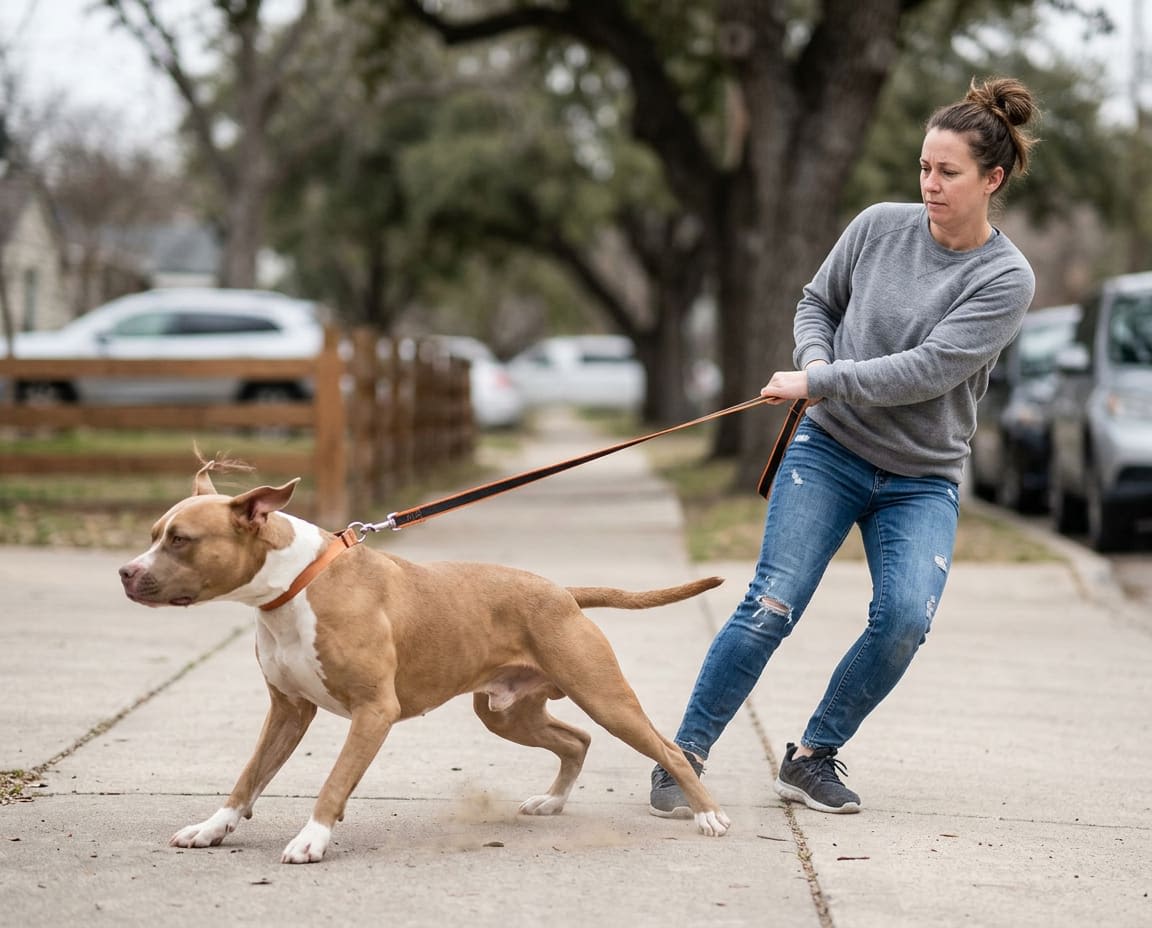
For two years, every walk with my dog ended the same way - my shoulder aching, my dog coughing, and me apologising to whoever we'd just been dragged past.
So I did what every owner of a dog that pulls does: I started buying tools. A slip lead a trainer mentioned. A prong collar a video promised would give "instant control." A head halter the pet shop swore by. Each worked for a week, then we were back to square one - except now he flinched when I picked up the leash.
Here's the part nobody told me: most of those tools don't just fail to fix pulling - they quietly make it worse, either by hurting your dog or by training him to pull even harder.
4 walking tools to avoid if your dog pulls
All normal to own. For any dog that pulls, every one of them works against you.
The slip lead
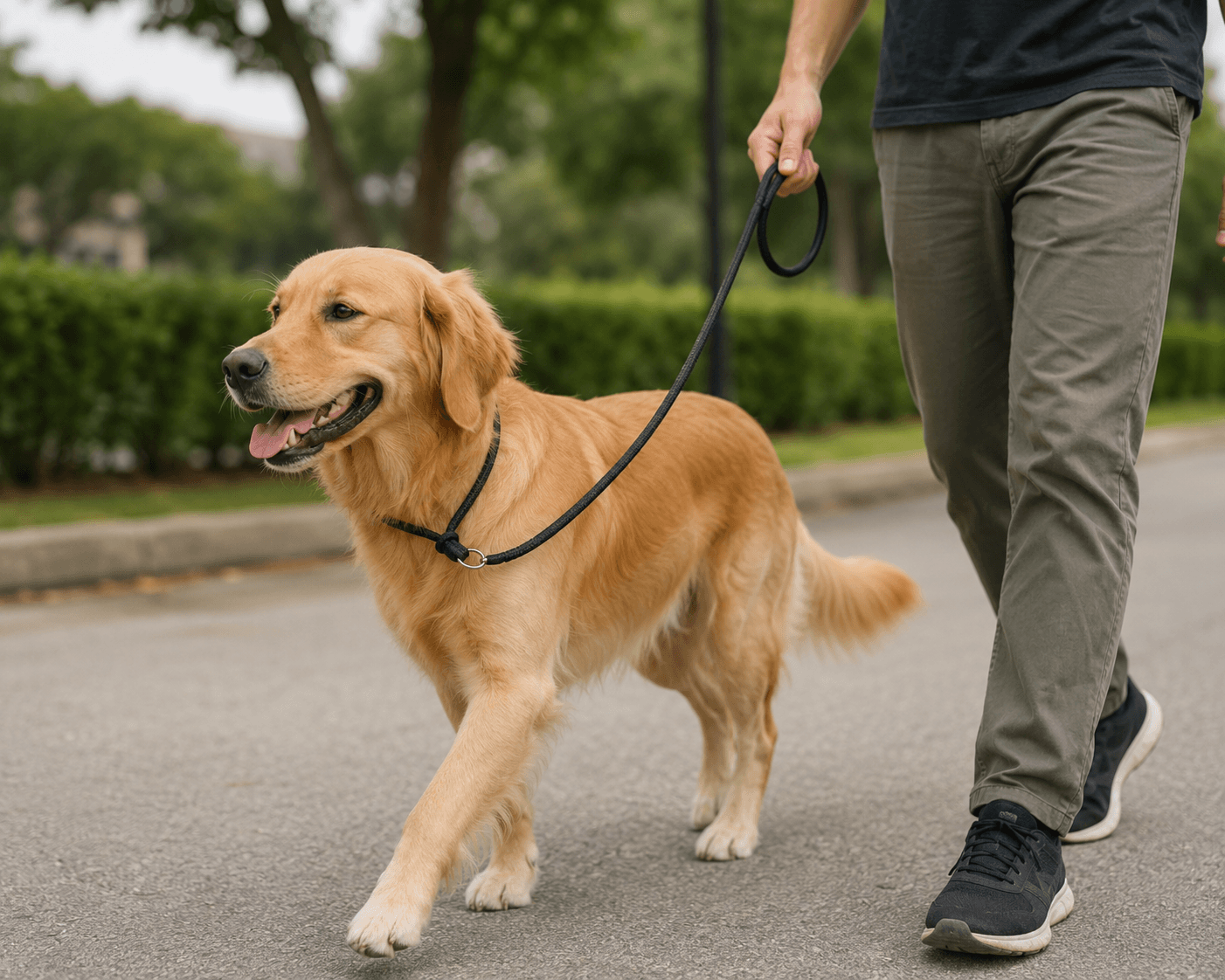
A single loop of rope with no stopper, so it tightens the harder your dog pulls - right around the throat, the most delicate part of the airway. On a full-weight lunge, that's the windpipe pressure vets link to coughing, nerve damage and tracheal collapse.
Why to avoid itThe only "control" comes from pain, aimed at the most fragile spot exactly when your dog pulls hardest.
The prong collar
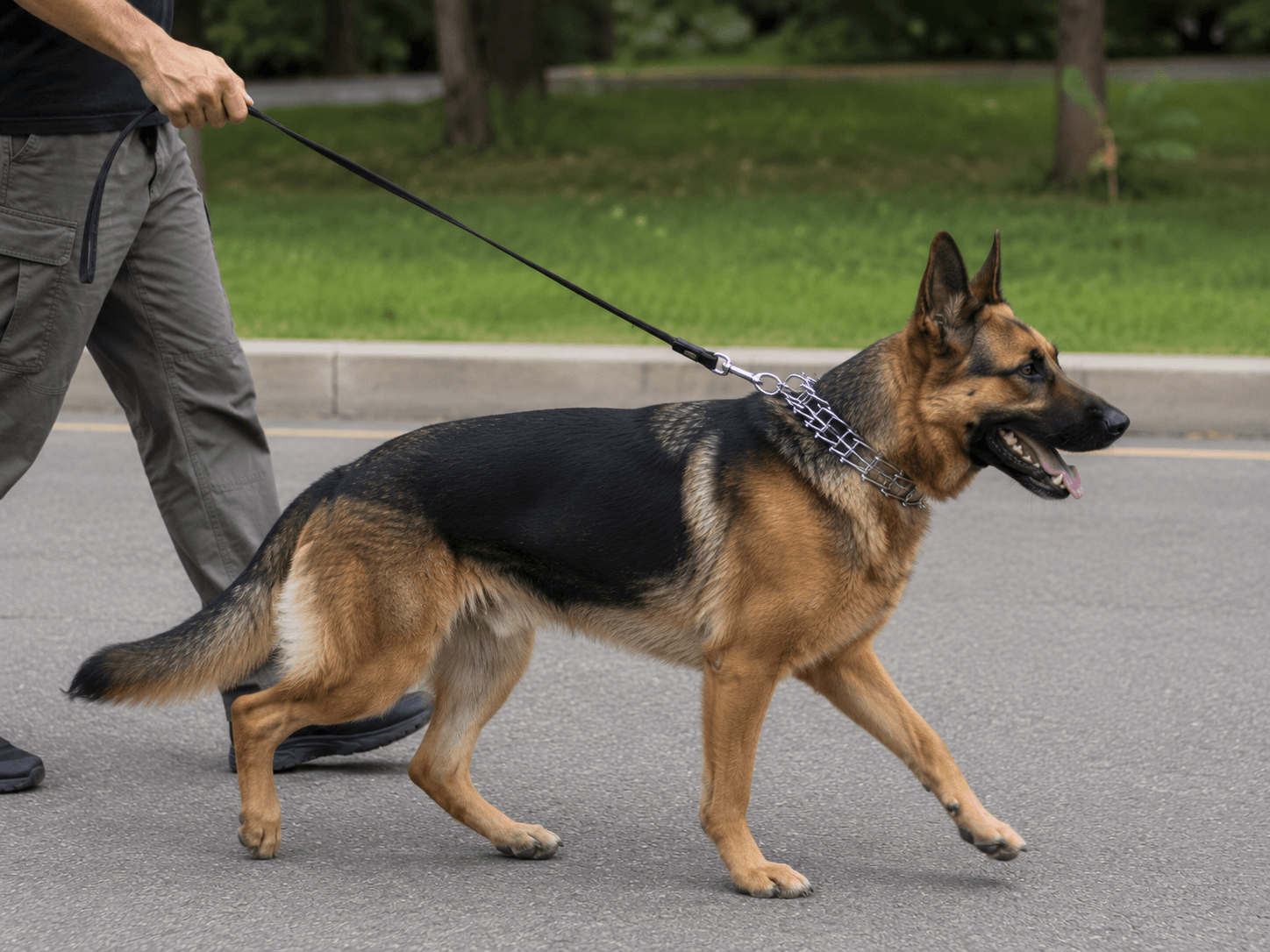
Linked metal prongs that pinch the neck when the leash tightens, sold as "training" for dogs that pull. Banned or restricted in several countries - vets warn it causes pain and bruising, and teaches your dog to link that pinch to other dogs or people, which becomes fear and reactivity.
Why to avoid itIt controls through pain and intimidation, and the hit to your dog's trust can outlast the walk by months.
The head halter
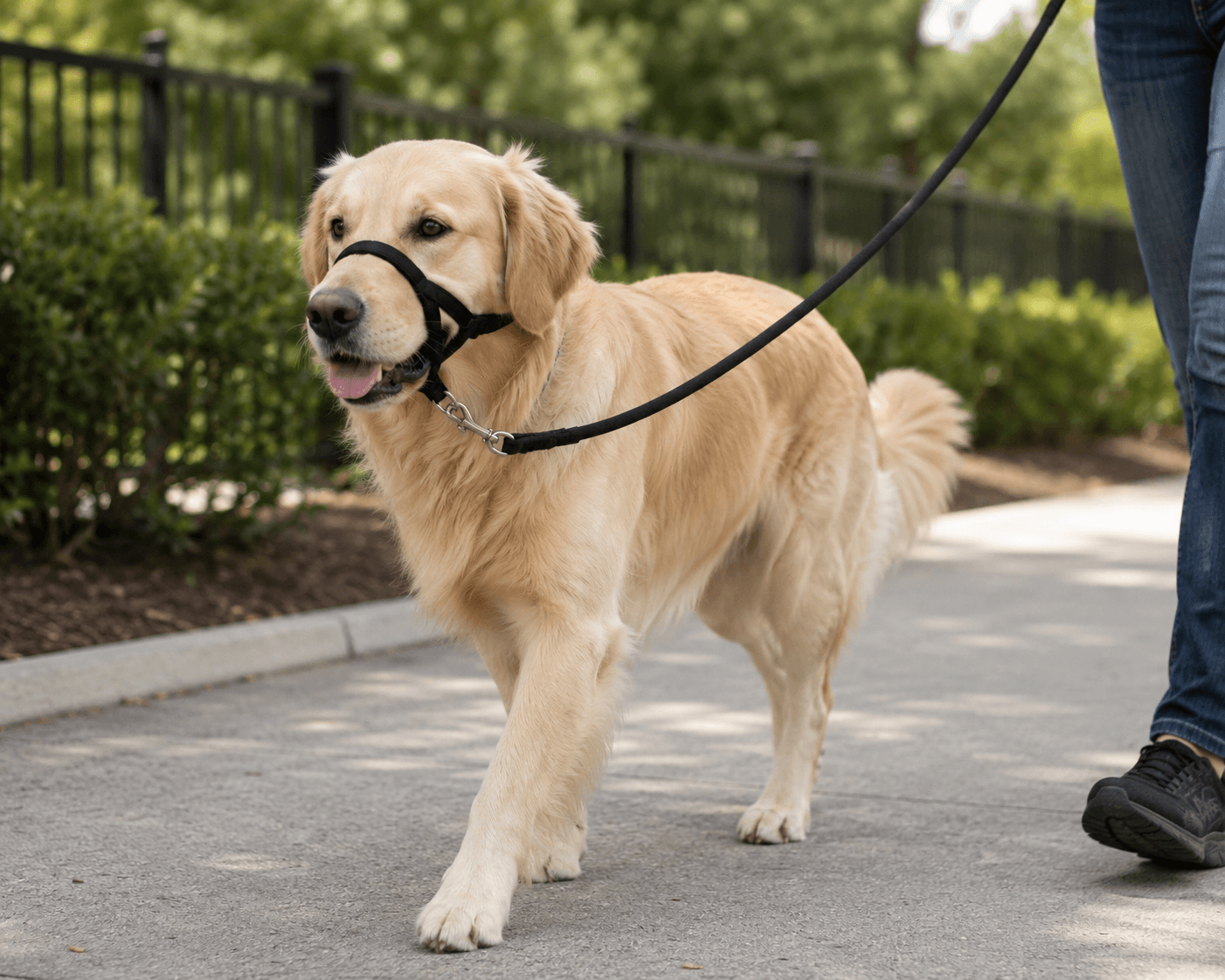
A strap over the muzzle that steers the head like a horse halter. Most dogs hate it - they spend the walk pawing at it or dragging their face on the ground. Mild cases leave raw marks on the nose; one hard lunge can wrench the neck or spine, because all the force pivots on the head.
Why to avoid itStressful for most dogs, and a sudden pull lands straight on the delicate neck and spine.
The back-clip harness
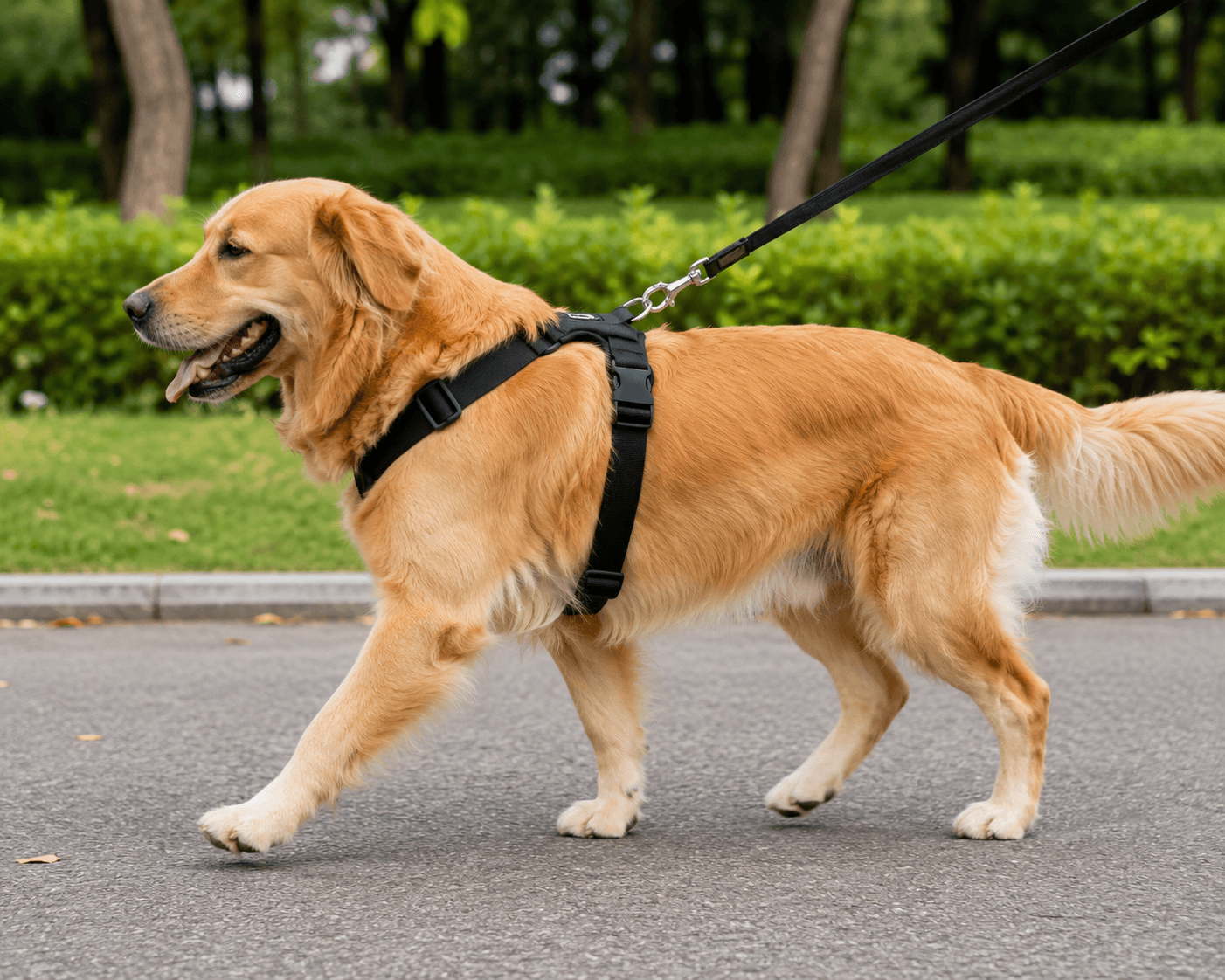
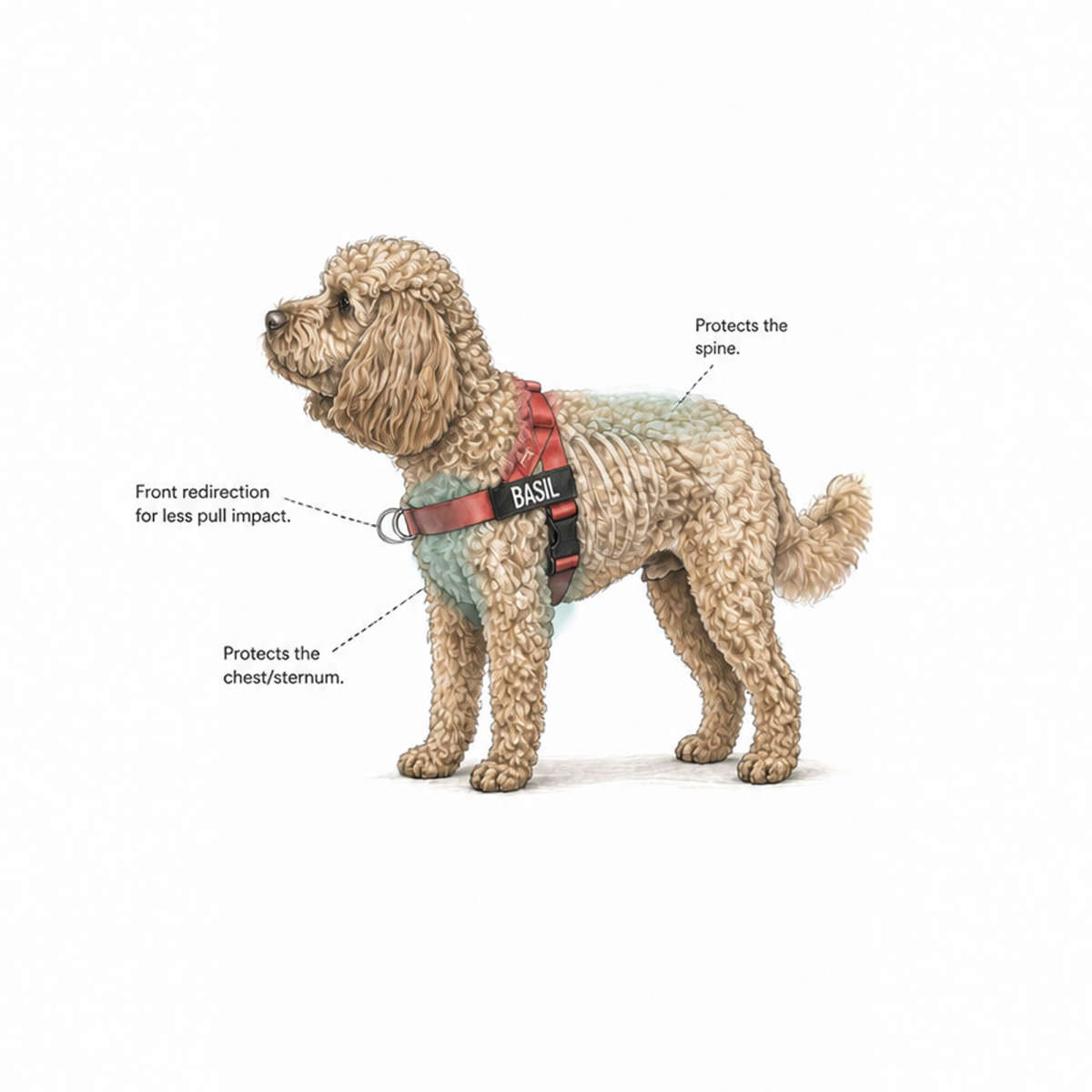
The comfy everyday harness nearly everyone owns - and the one that backfires most quietly. Clipping behind your dog triggers the opposition reflex: the instinct to push against pressure from behind (the same reflex that lets sled dogs haul a sled). It feels kind while steadily teaching him that pulling works.
Why to avoid itIt won't hurt your dog - but it actively trains the exact pulling you're trying to stop.
The thing all four have in common
Look closely and every one of them fails for the same reason: it either causes pain, or it accidentally rewards pulling. Which means you don't need four different walking tools. You need one that fixes the root cause.